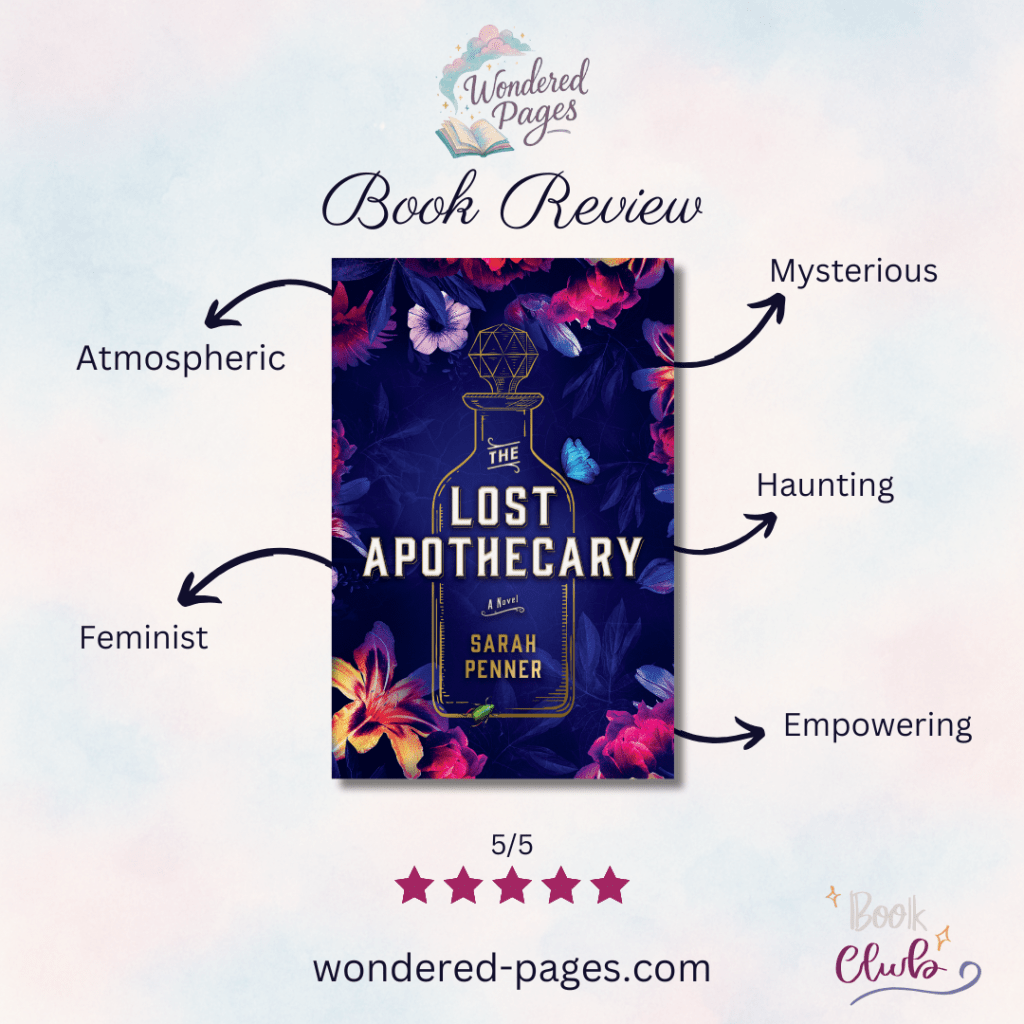
ABOUT THE BOOK
GENRE – Fantasy, Fiction, Historical
ISBN –
Format – Hardcover
YEAR PUBLISHED – 2021
PAGE COUNT – 320
DATES READ – February 24, 2025 – March 9, 2025 (13 days)
STAR RATING – ⭐️⭐️⭐️⭐️⭐️
SPICE METER: 🌶️ 0 of 5
CONTENT WARNINGS – Infidelity, murder, miscarriage, violence against women
GET YOUR COPY – Barnes and Noble, Powell’s, Bookshop, WorldCat
INITIAL THOUGHTS
I was intrigued by the premise of a hidden apothecary dispensing poisons to women wronged by men—dark, delicious, and undeniably feminist. I didn’t expect to get so invested in the dual timelines, but the way Caroline’s modern-day story intertwined with Nella and Eliza’s 18th-century lives really pulled me in. I started it on a whim and ended up racing through it.
WHAT IT IS ABOUT
In 1791 London, a secret apothecary serves women in desperate need—with a vial of poison. When 12-year-old Eliza stumbles into the shop, it sets off a chain of events with lasting consequences. In present-day London, Caroline finds a mysterious vial by the Thames and becomes obsessed with uncovering its origins. As her research unfolds, the lives of these three women collide in unexpected and life-altering ways.
MY REVIEW
Writing Style
Penner’s writing is atmospheric and immersive. She weaves historical detail into her prose without bogging down the story. The tone felt intimate, and the pacing stayed steady, though the modern chapters occasionally lagged in comparison to the historical ones.
Themes & Messages
At its heart, this is a story about women reclaiming agency after betrayal. Each protagonist—Nella, Eliza, and Caroline—realizes that their lives have been shaped by the decisions of men, and each must choose whether to stay trapped or rewrite her future. There’s also a strong undercurrent of intergenerational strength and legacy, especially through the symbolism of the apothecary register.
Characters
Nella was layered and sympathetic—a woman hardened by loss but still holding on to threads of humanity. Eliza was a standout: curious, endearing, and more courageous than her age suggests. Caroline’s arc was about rediscovery and courage, and while she started out the least compelling to me, I ended up rooting for her.
Vibes, Settings, and Tropes
The dark alleys of 1790s London, combined with dusty library archives and foggy riverside walks in modern day, made for a haunting yet cozy mystery setting.
- Dual timeline
- Feminist revenge fantasy
- Historical London mystery
- Found family/female friendship
- Academic sleuthing
Favorite Quotes
“Perhaps the greatest power we women hold is that others underestimate us.“
“I had felt powerful once… and I wanted to feel that again.”
“Every woman has a story. That’s what the register is for. To remember.”
What Worked For Me
I really enjoyed the way the dual timelines wove together. Caroline’s present-day discoveries made the past feel alive, and the moments where her path intersected with Nella and Eliza’s were some of my favorites. I also appreciated that each woman’s arc focused on reclaiming control after betrayal; that theme gave the book emotional depth and a sense of triumph. The historical setting felt immersive, and I loved the subtle mystery elements that made London feel layered with secrets. While the ending was a bit of a cliffhanger, I found it exciting, and it left me genuinely hoping for a sequel to see what comes next for all three women.
What Didn’t Work For Me
A few elements stretched believability—particularly how neatly the timelines connected and some of Caroline’s historical leaps. While I loved the concept, the execution occasionally felt too tidy. And the ending, though satisfying, left just enough unresolved that I’m craving a sequel.
Final Thoughts
The Lost Apothecary is an evocative, twisty tale that explores the consequences of betrayal and the freedom that comes from reclaiming your story. It balances mystery, history, and emotional growth in a way that kept me turning pages. I’d recommend it to fans of The Night Circus, The Paris Library, or anyone who enjoys morally complex, female-centered historical fiction.
Let’s Talk
If you could visit one secret shop hidden down an alley in London, what would it sell—and what would you buy?
 Wondered Pages
Leave a comment