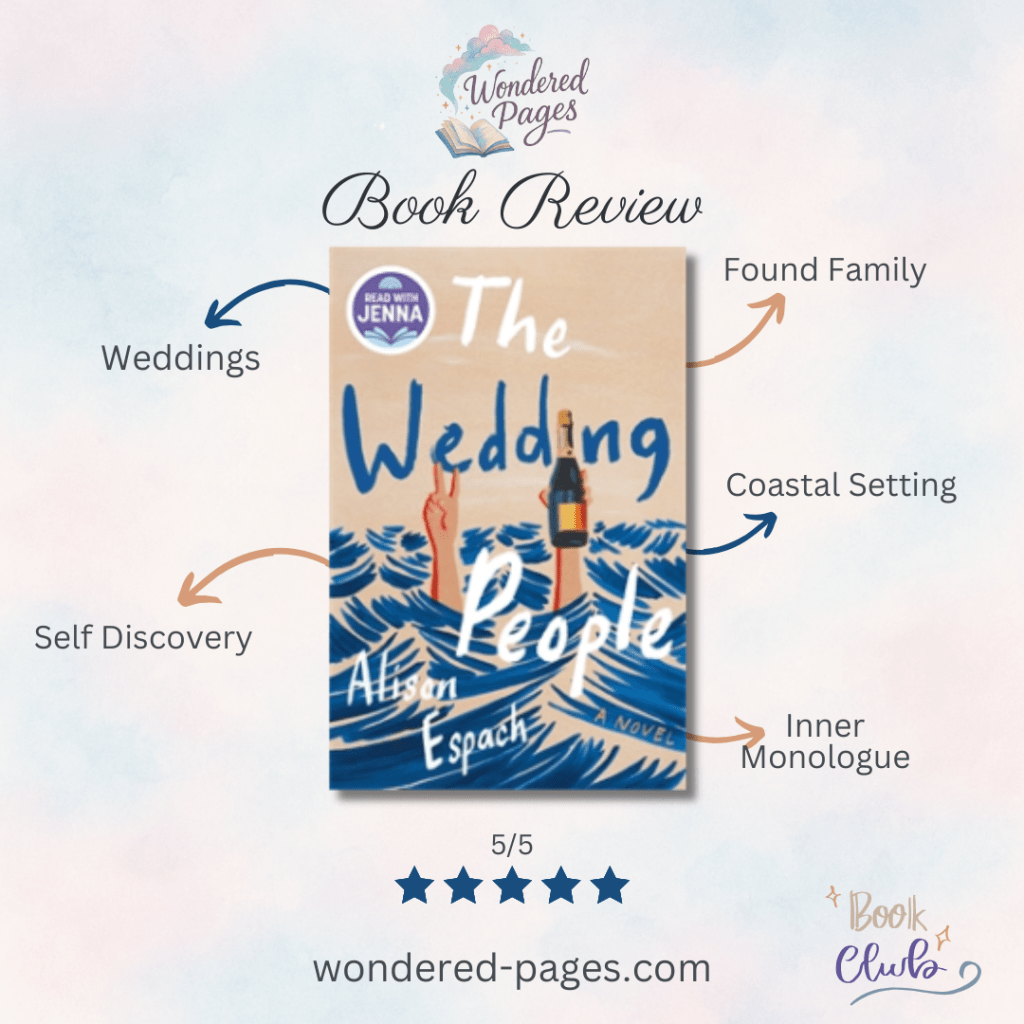
ABOUT THE BOOK
GENRE – Fiction
ISBN – 9781250899576
Format – Hardcover
YEAR PUBLISHED – 2024
PAGE COUNT – 363
DATES READ – April 15, 2025 – April 20, 2025 (5 days)
STAR RATING – ⭐️⭐️⭐️⭐️⭐️ 5 of 5
SPICE METER: 🌶️ 1 of 5
CONTENT WARNINGS – Suicide attempt, Suicidal thoughts, Infertility, Infidelity, Death of parent, Miscarriage, Vomit, Animal death, Cancer
GET YOUR COPY – Barnes and Noble, Powell’s, Bookshop, WorldCat
INITIAL THOUGHTS
I picked up The Wedding People because of the buzz; it was a Read with Jenna pick and a New York Times bestseller. I was in the mood for something introspective, hopeful, and character-driven. I didn’t expect a story told almost entirely through Phoebe’s inner voice and dialogue, one that explored grief, identity, and starting over in an unexpectedly heartfelt way. The pace was slower than I preferred, and at over 360 pages, I felt the weight of the book. Still, Phoebe’s journey left an impression on me.
WHAT IT IS ABOUT
After her life falls apart, Phoebe checks into the grand Cornwall Inn alone, broken and untethered, during a weekend wedding. Mistaken for a wedding guest, she unexpectedly becomes enmeshed in the lives of the bridal party. Through strange friendships, uncomfortable truths, and a little emotional chaos, Phoebe slowly begins to reconnect with herself.
MY REVIEW
Writing Style
Espach’s writing is unique. It is told almost entirely through Phoebe’s perspective, with long stretches of internal monologue and dialogue. At times, it is emotionally poignant and intimate. Other times, it feels wordy and meandering. This style works well for character insight but occasionally bogged down the pacing.
Themes & Messages
The book explores self-rediscovery, boundaries in friendships, chosen family, grief, and the courage it takes to live honestly. I appreciated the message that not all endings must be romantic to be fulfilling. It’s a story about emotional healing and learning to sit with the quiet moments.
Characters
Phoebe felt deeply real, flawed, wounded, but ultimately lovable. I appreciated that she didn’t end up romantically involved with any of the main male characters. It made her arc feel more genuine. Juice was a quiet standout, and their sweet bond grounded the story. Lila, on the other hand, was frustrated. She often pushed Phoebe’s boundaries and treated her like a side character in her own life.
Vibes, Settings, and Tropes
The setting, a grand, coastal New England inn during a wedding weekend, added charm and elegance. It has “sad girl at a wedding” vibes, with tropes like found family, misunderstood stranger, and forced proximity. There’s no romance arc for Phoebe, but there’s emotional intimacy everywhere.
Favorite Quotes
“I think we talk about happiness all wrong. As if it’s this fixed state we’re going to reach. Like we’ll just be able to live there, forever. But that’s not my experience with happiness. For me, it comes and goes. It shows up and then disappears like a bubble.”
“She didn’t understand how she could love herself. She didn’t understand what people even meant when they said they loved themselves. She honestly didn’t believe them. How could you love yourself? How could you love yourself when you know every single horrible thing you’ve ever thought?”
“Love is visible—it paints the air between two people a different color, and everyone can see it.”
What Worked For Me
- The raw, tender portrayal of grief and rediscovery.
- Phoebe’s emotionally honest character arc.
- The subversion of expected romance tropes.
- The gentle friendship with Juice.
- The introspective writing voice.
What Didn’t Work For Me
- The pacing felt too slow in parts.
- Some scenes dragged or felt repetitive.
- Lila was hard to tolerate; her selfishness often overshadowed more nuanced dynamics.
- At times, Phoebe’s internal dialogue was so constant it made the narrative feel stuck.
Final Thoughts
The Wedding People is a quiet, layered story for anyone who’s ever felt untethered or needed to find themselves again. It’s not a fast read and won’t be for everyone, but it has a quiet power if you stick with it. I’d recommend it to fans of introspective contemporary fiction, especially those who enjoy character-driven novels without needing a love story to tie everything together.
Let’s Talk
Have you ever gone on a solo trip that changed your life? If you were fresh off a breakup, would you stay in a hotel full of strangers celebrating a wedding?


 Wondered Pages
Leave a comment